
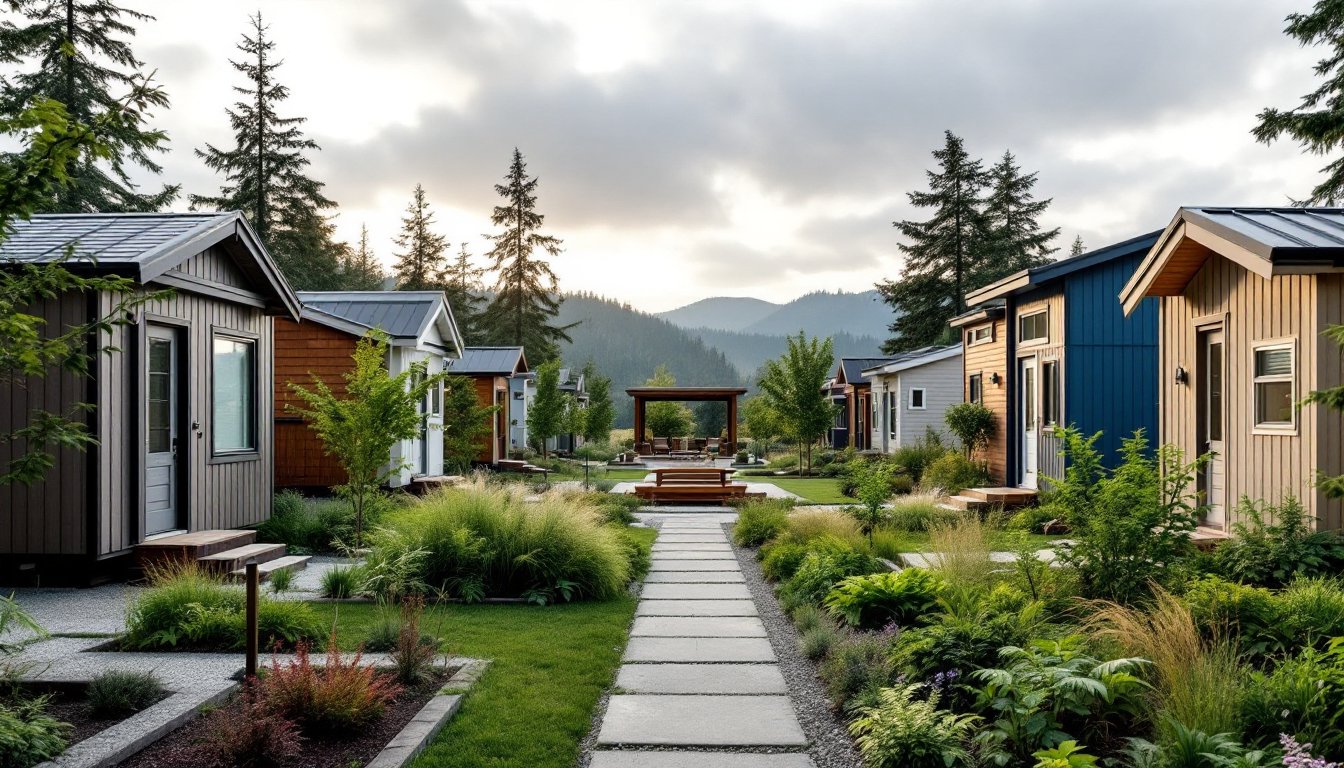
Tiny home communities are reshaping how people think about homeownership in Washington State. If you’re considering a move to the Pacific Northwest and want to downsize without sacrificing quality of life, these intentional communities offer affordable, sustainable alternatives to traditional suburban sprawl. Whether you’re drawn to the vibrant energy of Western Washington or the affordability of the Eastern region, tiny home communities in Washington provide diverse options for different lifestyles and budgets. This guide breaks down what these communities are, why Washington’s unique landscape makes them ideal, where to find them, and what you need to know about financing, regulations, and costs before making the leap.
Table of Contents
ToggleKey Takeaways
- Tiny home communities in Washington State offer affordable, sustainable alternatives to traditional homeownership, with prices ranging from $120,000–$550,000 depending on location and regional amenities.
- Washington’s mild climate, progressive building codes, and cultural emphasis on sustainability make the state an ideal hub for tiny home living and intentional communities.
- Financing tiny homes requires understanding ownership structure: condo communities use standard mortgages but may require 10–20% down payments, while land-home models are less common but easier to finance.
- Monthly HOA fees ($150–$400) are essential costs to factor into affordability calculations, as they’re comparable to mortgage payments and vary by community amenities and governance.
- Western Washington communities near Seattle command premium prices and offer extensive shared facilities, while Eastern Washington communities provide more affordable entry points with slower-paced, tight-knit environments.
- Before purchasing, verify the community’s zoning compliance, review CC&Rs and governance structure (HOA vs. cooperative), and confirm all units meet current building codes and have certificates of occupancy.
What Are Tiny Home Communities?
Tiny home communities are planned neighborhoods where residents live in compact homes, typically between 400 and 800 square feet, on individual or shared lots. They’re different from mobile home parks or RV communities because these are permanent, owner-occupied dwellings, not rentals. Each unit sits on its own foundation and may have its own utility connections, though some communities emphasize shared amenities like gardens, laundry facilities, or common spaces.
The appeal isn’t just about size. These communities are intentionally designed to foster neighborly connection while keeping costs down. Residents often participate in community governance, environmental stewardship, and shared decision-making. According to recent home design news from Curbed, the tiny home movement has accelerated as younger buyers and retirees alike seek lower mortgages, reduced maintenance, and walkable neighborhoods. Many tiny home communities in Washington prioritize sustainable building practices, native landscaping, and pedestrian-friendly layouts, a deliberate contrast to car-dependent suburban developments.
Why Washington State Is Ideal for Tiny Living
Washington’s combination of geography, climate, and housing demand makes it a natural hub for tiny home communities. The state’s mild, wet winters and moderate summers don’t require the same extreme heating or cooling as other regions, which reduces utility costs, a major advantage when every square foot counts. Building codes in Washington are also receptive to innovative housing models, and several municipalities have actively updated zoning to allow and encourage accessory dwelling units (ADUs) and small-lot subdivisions.
Practicality aside, Washington’s cultural alignment with minimalism, sustainability, and community-oriented living attracts people already predisposed to tiny living. The state has strong environmental values, and tiny homes naturally fit that ethos: lower carbon footprints, reduced resource consumption, and less land waste. Housing costs remain high in King County and the Seattle metro area, so tiny homes offer a realistic path to homeownership for middle-income buyers priced out of traditional markets. Even in Eastern Washington, where land is cheaper, tiny communities appeal to retirees and remote workers who want predictable costs and social connection.
Top Tiny Home Communities in Washington
Western Washington Communities
Western Washington hosts most of the state’s active tiny home communities, concentrated around Seattle, Tacoma, and smaller Puget Sound towns. Olympia Oly Housing Cooperative, near the state capital, is one of the longest-established communities and focuses on affordability and democratic governance. Cohousing at Wallingford in Seattle offers modern tiny homes with extensive shared amenities, though pricing reflects Seattle’s market rates. Smaller communities like Newberry Village near Bellingham and Cascadia Cohousing in Whatcom County attract residents seeking both tiny footprints and strong community bonds.
These communities typically fall in the $300,000 to $500,000+ range depending on location, finishes, and square footage. Most include monthly HOA fees (often $200–$400) that cover shared facilities, property management, and utilities in some cases. According to small space living guides from Apartment Therapy, Western Washington residents often maximize tiny home layouts with built-in storage, lofts, and efficient kitchens, design strategies that work equally well for new builds or renovations.
Eastern Washington Communities
Eastern Washington communities tend to be more affordable and less crowded. Communities like Spokane Cohousing and several smaller developments around Tri-Cities (Richland, Kennewick, Pasco) offer entry-level pricing, often $150,000 to $250,000, and lower monthly HOA costs. The trade-off is less density of services and longer distances to urban amenities, though many Eastern Washington tiny communities intentionally embrace that slower pace and tight-knit feel.
Ellensburg and Pullman, home to Washington State University and Central Washington University respectively, have seen growing interest in student and faculty housing through tiny models. These communities sometimes offer workforce housing models with deed restrictions to keep homes affordable for educators and service workers long-term.
Cost, Financing, and Property Tax Considerations
Pricing for tiny homes in Washington ranges dramatically based on location and amenities. Western Washington communities near Seattle typically range from $300,000 to $550,000, while Eastern Washington entries can be found for $120,000 to $280,000. Remember that these prices don’t always include land, many communities are condominiums where you own the structure but not the underlying lot, which affects financing and future appreciation.
Financing a tiny home works differently depending on ownership structure. If you’re buying into a condo community (most common), you’ll use standard mortgage financing, though some lenders require higher down payments, 10% to 20%, on non-traditional properties. Loan amounts may cap lower than conventional homes, and some lenders are still cautious about tiny home mortgages. Owner-occupied land-home models (where you own both) are more straightforward to finance but less common in Washington.
Property taxes on tiny homes are proportionally lower than full-size homes, though exact rates depend on your county. Snohomish, King, and Pierce counties have different assessment methods: some assess tiny homes as condominiums (based on unit value), while others assess land separately. Contact your county assessor for specifics. Monthly HOA fees in tiny communities typically range from $150 to $400 and should be factored into affordability calculations, they’re as real as a mortgage payment. Resale value is harder to predict than traditional homes, so talk to community leaders and local real estate agents about historical appreciation and buyer demand in specific communities.
Zoning, Regulations, and Legal Requirements
Washington State allows tiny homes, but local zoning rules vary. Many municipalities now permit ADUs as-of-right, and several have adopted cottage cluster zoning that encourages small-lot, small-home developments. Seattle, for example, allows ADUs in single-family zones without variance, and Tacoma has streamlined approval for accessory dwelling units. But, rural counties and smaller towns may be slower to adopt, always check your target area’s comprehensive plan and zoning code before committing.
If you’re buying an existing tiny community, the legal structure matters significantly. Homeowners associations (HOAs) are standard, and you’ll need to review the CC&Rs (covenants, conditions, and restrictions) carefully. Some communities operate as cooperatives, where residents own shares in the land trust rather than individual parcels, this model offers affordability perks and community control but requires active participation and consensus decision-making. Per HGTV’s real estate lifestyle coverage, community governance structure is as important as square footage when choosing where to live.
Permits and inspections follow standard building codes. Because tiny homes sit on individual foundations, they need standard electrical, plumbing, and building permits like any house. Some communities use prefabricated or modular construction to reduce costs and timelines, but the final inspections remain the same. Before purchasing, verify that the community has obtained its final certificates of occupancy and that all units meet current IRC (International Residential Code) standards. If considering a custom build within an existing community, budget 6–12 months for permitting and construction, and confirm that the community’s design guidelines and restrictions align with your vision.