
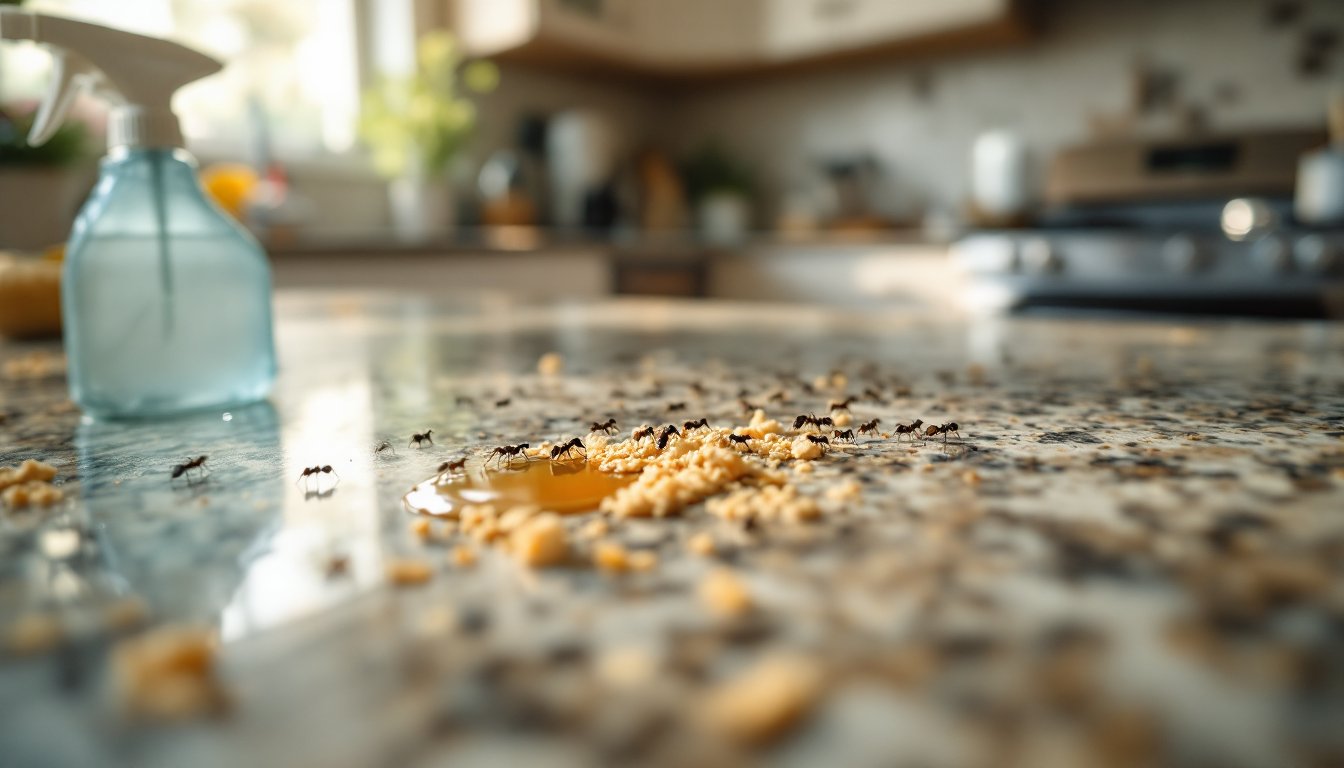
Finding a trail of ants marching across your kitchen counter is every homeowner’s nightmare. Whether it’s carpenter ants, pavement ants, or pharaoh ants, an infestation can escalate quickly if left unchecked. The good news? Most ant control problems can be solved with a methodical DIY approach before you need to call in reinforcements. This guide walks you through identifying the problem, eliminating food sources, sealing entry points, and deploying both natural and commercial treatments to reclaim your home from these persistent invaders.
Table of Contents
ToggleKey Takeaways
- Ant control in home starts with identifying the species (carpenter, odorous house, or pavement ants) since each requires different treatment urgency and methods.
- Eliminate food and water sources by storing pantry items in airtight containers, cleaning daily, and fixing leaky faucets—this step alone can reduce ant activity by 50% or more.
- Seal entry points with silicone caulk along baseboards, door frames, and foundation cracks to prevent ants from establishing indoor trails and nests.
- Deploy borax-based natural baits or commercial liquid baits (like Terro) directly on ant trails to poison the colony at the source within 3 to 5 days.
- Call a professional pest control service if DIY ant control efforts show no improvement after two weeks, especially if carpenter ants or structural damage is suspected.
Why Ants Invade Your Home And When To Act
Ants don’t show up on a whim, they’re scouts searching for three things: food, water, and shelter. A single ant that finds a crumb will lay down a chemical trail (pheromone) for its colony, turning your kitchen into Grand Central Station within hours. The problem compounds because most colonies number in the thousands, and a few visible ants usually mean thousands more hiding behind walls or under floors.
Not all ant infestations demand immediate action, but most should be addressed within a week or two. Carpenter ants are the exception, they tunnel through wood to nest, potentially weakening structural framing. If you spot large (¼ inch or bigger) black or reddish ants, especially near wood, treat it as urgent. Pharaoh ants and odorous house ants, while annoying, rarely pose structural risk but spread fast. The window to stop them with DIY methods is narrow, so early detection matters.
Identify The Ant Species In Your Home
You can’t choose the right treatment without knowing what you’re fighting. Spend 10 minutes observing the ants and jotting down details:
Size and color are your first clues. Carpenter ants are the largest (¼ to ½ inch) and usually black, reddish, or a mix. Odorous house ants are small (⅛ inch), dark brown or black, and smell like rotten fruit when crushed. Pavement ants are medium-sized (⅛ to 3/16 inch), brown or black, and often nest in cracks in concrete.
Behavior patterns help narrow it down. Do the ants follow tight trails or wander randomly? Are they active day and night, or mostly at night? Carpenter ants prefer moisture and are often found near bathrooms, kitchens, or wood piles. Pharaoh ants create multiple colonies and move quickly if threatened. Odorous house ants leave visible trails from nest to food source.
Snap a photo with your phone’s camera zoomed in, or try capturing one in a small container for closer inspection. Compare it against online ant identification guides or contact your local extension office, many offer free identification services.
Eliminate Food Sources And Seal Entry Points
No bait trap or spray works if ants keep finding fresh supplies. Start with a thorough kitchen deep clean:
Remove food attractions by storing pantry items in airtight containers, plastic bins with snap-tight lids or glass jars with sealed tops. Wipe down counters and stovetops daily with hot soapy water or a diluted bleach solution (1 part bleach to 10 parts water). Don’t forget crumbs under appliances: pull the fridge or stove out and sweep behind it. Empty trash daily, rinse bottles and cans before recycling, and don’t leave pet food sitting out overnight.
Fix water sources by tightening leaky faucets, wiping condensation from pipes, and ensuring shower and bathroom exhaust fans work. Ants need water as much as food: moisture-hungry species like carpenter ants will establish nests near damp areas.
Seal entry points next. Follow ant trails with your eyes to find where they’re coming in, usually along baseboards, door frames, or cracks in foundation. Use a clear silicone caulk (not acrylic: it shrinks) to seal gaps around exterior doors, windows, and where utilities enter the house. For baseboards and interior walls, painter’s caulk works. Caulk both inside and outside the home if possible. Pay special attention to kitchen and bathroom perimeters. You’ll need a caulk gun (available at any hardware store for under $15) and maybe an hour of your time. This single step often reduces ant activity by 50% or more.
DIY Ant Control Methods And Treatments
Natural Remedies For Ant Elimination
Natural treatments work best for smaller infestations or as a first line of defense. The advantage is low toxicity around pets and kids: the trade-off is slower results (5 to 10 days vs. 2 to 3 for chemicals).
Borax baits are the gold standard of natural DIY control. Ants carry borax-laced food back to the nest, where it poisons the colony, not just the foragers you see. Mix equal parts borax powder and powdered sugar, add a little water to make a paste, and place small dabs on cardstock near ant trails. Keep the paste moist by spraying every other day. Wear nitrile gloves when handling borax: it’s safe at this concentration but shouldn’t be ingested. Keep baits away from pets and children.
Cinnamon, peppermint, or citrus sprays act as repellents rather than killers. Mix a few drops of essential oil with water in a spray bottle and apply along baseboards and entry points. They won’t eliminate an infestation but can deter foragers. Ants also dislike diatomaceous earth, the food-grade type (not pool-grade). Dust it lightly around baseboards and under appliances. It works by damaging the ant’s exoskeleton, but only if dry: once it gets wet, it’s useless.
Cinnamon sticks and coffee grounds scattered around problem areas are safe and worth trying if you have them on hand, though results are inconsistent.
Over-The-Counter Ant Control Products
Commercial baits and sprays deliver faster, more reliable results than natural methods. Most fall into two categories: baits and perimeter treatments.
Liquid and gel baits (like Terro liquid baits or Raid ant baits) are your workhorse. They contain a slow-acting poison suspended in an attractant, usually sugar or peanut oil. The ant eats a little, returns to the nest, and dies within 24 to 48 hours. Place baits directly on ant trails or near entry points. Don’t spray the area first: pesticides will repel ants and ruin the bait’s effectiveness. Baits typically work within 3 to 5 days, though you’ll see results sooner. One package covers most home infestations.
Ant spray treatments (like Raid or Hot Shot) kill on contact but don’t address the colony. They’re better as a finishing move after baits have done the heavy lifting. Spray along baseboards, under sinks, and around entry points. Always wear nitrile gloves and a dust mask, and ensure good ventilation. Follow label directions exactly, more isn’t better, and overapplication wastes product and increases exposure. Keep children and pets away during and for several hours after application.
Perimeter barriers like Termidor foam or ant stakes create a chemical fence around the home’s foundation. These are more involved to apply and often best left to professionals, but some homeowners handle them as part of a comprehensive plan. If you go this route, rent safety equipment and read the label thoroughly.
Most infestations respond to a combination: seal entry points, remove food sources, deploy baits for 3 to 5 days, then spot-spray if needed. Experts from Good Housekeeping recommend this layered approach for best results.
When To Call A Professional Pest Control Service
DIY methods fail in a few scenarios. If you’ve sealed entry points, removed food sources, and deployed baits for a full two weeks with no improvement, it’s time to call in pros. The same goes if you suspect carpenter ants, structural damage can compound quickly, and professionals have the tools to locate hidden nests behind walls.
Multiple ant species or a large colony that keeps returning after treatment is another red flag. Professionals can access crawl spaces and attics, use commercial-grade baits unavailable to homeowners, and apply targeted treatments like wall injections. They’ll also back their work with a warranty.
Cost varies widely by region and infestation severity. A single service call typically runs $150 to $400: a quarterly maintenance plan might cost $100 to $200 per visit. Compare quotes from at least three providers using resources like HomeAdvisor or Angi, which let you review contractors and get cost estimates upfront. Ask whether the service includes a follow-up visit and what guarantees they offer.