
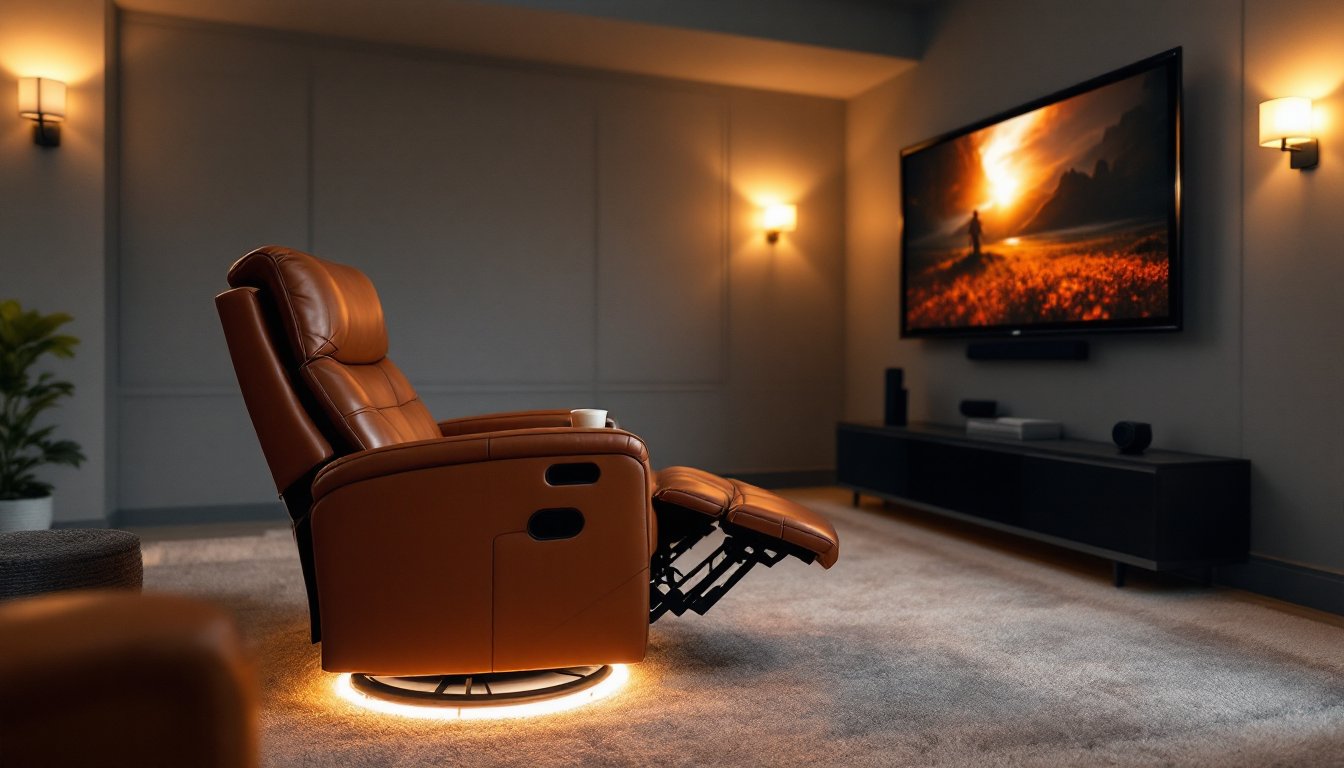
A home theater isn’t complete without seating that invites you to settle in for hours. A quality home theater recliner transforms movie nights from a chore into genuine relaxation, the difference between perching on the edge of a couch and sinking into pure comfort. Whether you’re building a dedicated media room or upgrading your living space, choosing the right recliner hinges on understanding what separates a decent chair from one that genuinely enhances your viewing experience. This guide walks through the key features, space considerations, and material choices that matter when shopping for home theater recliners.
Table of Contents
ToggleKey Takeaways
- The best home theater recliners combine smooth recline mechanics, supportive cushioning, and thoughtful design features like lumbar support and adjustable headrests to prevent discomfort during extended viewing sessions.
- Power recliners with remote controls are ideal for home theater settings since they allow fine-tuned positioning without disturbing others, while manual recliners offer a quieter, more affordable alternative.
- Budget-friendly home theater recliners ($500–$800) deliver solid comfort with reinforced wood frames and quality upholstery, while premium models ($1,500–$3,500+) justify their cost through dual motors, top-grain leather, heated seats, and extended warranties.
- Proper recliner placement requires measuring the fully reclined footprint (typically 60–80 inches deep), leaving 12–18 inches of space behind the chair, and positioning the screen at 1.5 to 2.5 times the diagonal measurement for optimal viewing distance.
- High-quality materials like top-grain leather, high-resiliency foam, and hardwood frames with doweled joints significantly extend recliner durability and comfort, while bonded leather and particleboard construction should be avoided for long-term use.
What Makes a Home Theater Recliner Truly Great
The best home theater recliners do more than recline, they support your body through hours of viewing without fatigue or discomfort. A genuinely great recliner combines smooth recline mechanics, supportive cushioning, and thoughtful design that anticipates how you actually use the chair.
Start with the recline mechanism. Manual recliners use a lever to adjust the backrest and footrest: they’re simpler and quieter but require you to adjust yourself. Power recliners use an electric motor, often with a remote control, letting you fine-tune your position with minimal effort. For a home theater setting, power recliners make sense because you won’t disturb others when settling into your ideal angle. A quality motor should move smoothly without jerking or grinding sounds.
Support matters just as much as the recline action. The seat cushion should be firm enough to hold your shape but soft enough to be comfortable for extended periods. The backrest should angle properly to reduce strain on your lower back and neck. Look for chairs with built-in lumbar support or adjustable headrests, these small details prevent the ache that comes from slouching through a three-hour movie. Cup holders, storage compartments, and USB charging ports have become standard on mid-range and higher models, and they’re genuinely useful once you have them.
Top Features to Look For in a Quality Theater Recliner
When comparing home theater recliners, several features separate the comfortable chairs from the ones you’ll avoid sitting in.
Recline range and locking mechanisms. Better recliners offer a wider recline range, some go nearly flat for napping, others stop at a generous 160 degrees. A recliner with independent backrest and footrest controls lets you stretch out fully or sit upright with just your feet elevated. Check that the locking mechanism holds firmly at every position: a recliner that creeps forward during a movie is a recliner you’ll regret.
Upholstery and base construction. The frame should be hardwood or high-grade plywood, not particleboard. Hardwood stretchers and a solid frame keep the chair from wobbling or weakening over years of use. The base, usually wood or steel, should be wide and stable enough to support the chair’s full recline without tipping. Legs or a pedestal base matter more than you’d think when you’re tilting back at a steep angle.
Armrest and side access. Theater recliners benefit from cup holders or storage compartments built into the armrests. Swivel bases or articulating armrests give you flexibility. Some higher-end models have adjustable armrests that move up and down or side to side, which is surprisingly luxurious for lazy hours of viewing.
Budget-Friendly Options Without Sacrificing Comfort
You don’t need to spend thousands to get a reliable theater recliner. A $500–$800 manual or entry-level power recliner delivers solid comfort, smooth recline action, and basic upholstery. Look for chairs with reinforced wood frames, decent foam cushioning, and genuine leather or high-grade microsuede. Brands often reduce costs by skipping motorized footrests or second motors, but that won’t ruin the experience. Manual recliners in this range work fine if you don’t mind a lever: they’re also quieter if noise matters in a shared space. An entry-level power recliner with a simple one-button remote offers convenience without premium pricing.
When budget-shopping, inspect the frame and joints before buying. Ask the retailer about the warranty, a solid frame warranty (usually 5–10 years) signals confidence in the construction. Fabric and cushion warranties are shorter (often 1–3 years) because upholstery wears naturally.
Premium Recliners for the Ultimate Experience
If you’re committing serious space and money to a dedicated theater setup, a $1,500–$3,500+ premium recliner justifies the investment. These chairs typically feature independent dual motors (one for the backrest, one for the footrest), allowing infinitely adjustable positions. Premium models offer top-grain leather, high-resiliency foam, and hand-stitched details that feel noticeably different from budget chairs. Heated seats, massage functions, and motion-sensor lighting add comfort and usability.
Premium recliners also include better accessories: integrated USB ports for charging devices, wireless charging pads, Bluetooth speakers, or even climate control. The armrests often have genuine wood trim and wider cup holders designed for full-size beverages and snacks. Frame construction uses reinforced hardwood and high-grade mechanisms built to handle 500+ pound capacities and decades of recline cycles. These chairs absorb more of your body weight and distribute it better, meaning less fatigue after long viewing sessions. Top recliners come with extended warranties (10–15 years on frame, up to 10 years on upholstery), reflecting their durability.
Size, Space, and Layout Considerations
Choosing a recliner’s size requires honest measurement and planning. A typical single home theater recliner spans 32–38 inches wide and extends 60–80 inches when fully reclined (longer when the footrest is out). Some oversized or XL models stretch even wider and deeper. Before buying, measure your available floor space with the recliner in the fully reclined position, not just where it sits upright.
Clear spacing matters for comfort and safety. You’ll want at least 12–18 inches of space behind the recliner for the backrest to recline without hitting a wall. Sides need room for armrests and easy access. In a compact room, consider a wall-hugger or space-saver recliner, designed to function in tight quarters: the backrest can recline even when the chair sits close to a wall.
Layout planning prevents regret. In a dedicated theater room, most people position recliners facing the screen at a viewing distance of 1.5 to 2.5 times the screen’s diagonal measurement. In a living room doubling as a theater, you’ll balance TV viewing with conversation space and traffic flow. A single recliner, a pair of recliners, or a sectional with reclining seats all work, it depends on your room size and household. Sectional recliners save space compared to individual chairs but require more careful measuring since they’re often custom-configured.
Electricity placement affects power recliner viability. If you choose a power model, you’ll need an outlet nearby for the power cord. Some chairs have 6-foot cords: longer cords are available but add clutter. Wireless or battery-powered remotes are standard and reduce cord frustration. In rooms where outlets are scarce, a manual recliner might be the simpler choice.
Materials and Durability: What Lasts and What to Avoid
The materials you choose determine how long your recliner serves you comfortably. Upholstery and frame construction are equally important.
Leather and leather-like fabrics suit home theater because they’re durable, easy to clean, and feel premium. Genuine top-grain leather develops a patina over years and breathes well, but it requires occasional conditioning and costs more. Bonded leather (leather scraps glued to a backing) is cheaper but prone to cracking and peeling within 3–5 years, avoid it for a piece you’ll use frequently. High-quality microsuede mimics leather’s feel and durability at a lower cost: it resists staining well and works great in homes with kids or pets.
Fabric upholstery (polyester blends, cotton, linen) offers variety and often softness that leather can’t match, but it demands more maintenance. Microfiber fabrics resist staining and wear well in high-traffic settings. If you choose fabric, ask about the fabric’s rub count (a durability measure), anything above 15,000 rubs on the Wyzenbeek test suggests good longevity for home use.
Frame construction is where corners shouldn’t be cut. A hardwood frame (oak, maple, or ash) outlasts particle board by decades. The joints should be doweled or mortise-and-tenon, not stapled or glued alone. Spring systems matter: eight-way hand-tied springs or sinuous (serpentine) springs both work well, while mesh-bottom frames without springs feel cheap and break faster. Foam cushioning should be high-resiliency or memory foam, not low-grade polyurethane that compresses quickly.
Avoid recliners with veneered finishes on hardwood parts if durability matters to you, veneer peels with age. Solid wood arms and trim, though less common, hold up better. The base should be hardwood or sturdy metal, not thin aluminum that bends. Recent reviews of the most comfortable recliner chairs emphasize the importance of frame construction in chair longevity, which aligns with what experienced DIYers know about furniture durability.
Creating Your Perfect Home Theater Setup
Placing your recliners and matching them to your room’s layout is the final step. In a single-recliner setup, position the chair to face the screen directly and at the recommended viewing distance, closer for smaller screens (20–32 inches), further back for larger ones (40+ inches). Ensure eye level sits roughly in the center third of the screen when you’re upright: this prevents neck strain during long sessions.
For multiple recliners, a slight stagger or angle (rather than strict rows) improves sightlines and comfort. Two recliners at 45-degree angles to the screen work better than side-by-side if space allows. In a sectional with built-in recliners, ensure all seats have decent screen visibility.
Ambient lighting shapes your theater experience. Soft, dimmable lighting on the sides of recliners reduces glare and screen reflection. Some premium recliners integrate motion-activated foot lighting for nighttime use, a small luxury worth considering. Cable management for power cords and remotes prevents the clutter that makes a space feel disorganized. Wall-mounted shelving for media players, soundbars, and gaming consoles keeps furniture and electronics coordinated.
Accounting for smart home features now saves hassle later. If your recliners have integrated USB ports or Bluetooth, positioning them near where devices will sit ensures easy access. Wireless charging and smart remotes reduce cord clutter. Home automation platforms now integrate with certain powered recliners, letting you adjust positions via voice command, an increasingly common feature in connected homes. Exploring smart home technology news and reviews keeps you informed on the latest recliner features and integration options.